Fearful Fictional Foes – A Review of “Monsters from the Id: Horror in Fiction and Film”

E. Michael Jones posits the original yet highly plausible thesis that the genre of “horror” is a psychological outgrowth of the repression of moral sensibilities occurring since the shift away from Judeo-Christian values after the Enlightenment. His sweeping historical argument begins with Mary and Percy Bysshe Shelley’s philosophical grounding in the tenets of the French Revolution, especially in the sexually permissive aspects of it. Frankenstein is Mary’s symbolic expression of her painful disillusionment regarding the efficacy of that materialist moral foundation and is the beginning of the genre of horror which has grown to become the quintessential psychological expression of the painful results of Enlightenment mores and values. An original and evocative book which also encompasses the vampire tradition, Monsters captures the imagination as it persuades. Extensively backed up with historical notes, examples from film and fiction, and a creative yet highly persuasive thesis.

Why are people intrigued with horror and – why do we like to be afraid? Why do many of us like to feel that thrill, that dropping out of the stomach from underneath us, that sense that all around us is out of control? The answer, I believe, is not that we like genuine fear. What we do find gratifying is to experience a simulacrum fear when we can control it, and when we know it’s not real. Ok, that makes sense, and it probably seems obvious once you hear it. But then the question is – Why? What makes most of an entire nation want to watch Hitchcock’s 1960 movie, Psycho, or more recently, become obsessed with zombies, vampires and even aliens? And what do these works, along with countless others, all have in common?
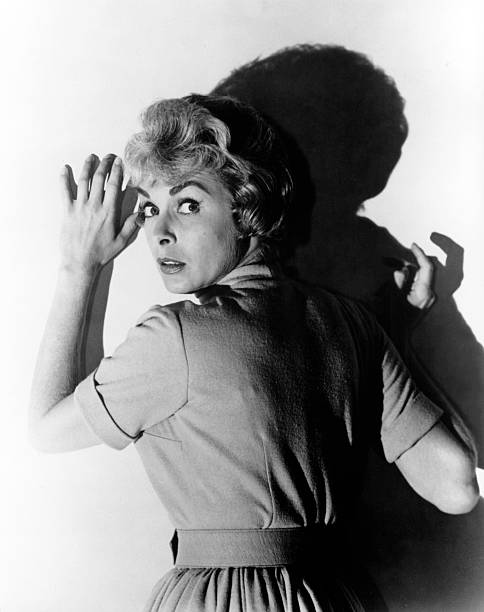
American actress Janet Leigh on the set of Psycho, directed by Alfred Hitchcock. (Photo by Sunset Boulevard/Corbis via Getty Images)

According to E. Michael Jones, the desire for horror arises from our societal rejection of morality due to the influence of the French Revolution; this rejection causes us to “sublimate” our innate sense of what is moral and immoral. This repression leaves us with a need to “let out” the guilt we feel from having sublimated our consciences. But this guilt must be expressed in curious ways because it will necessarily symbolically reveal the deep-set, hidden agony felt by those who deny their guilty consciences from themselves.
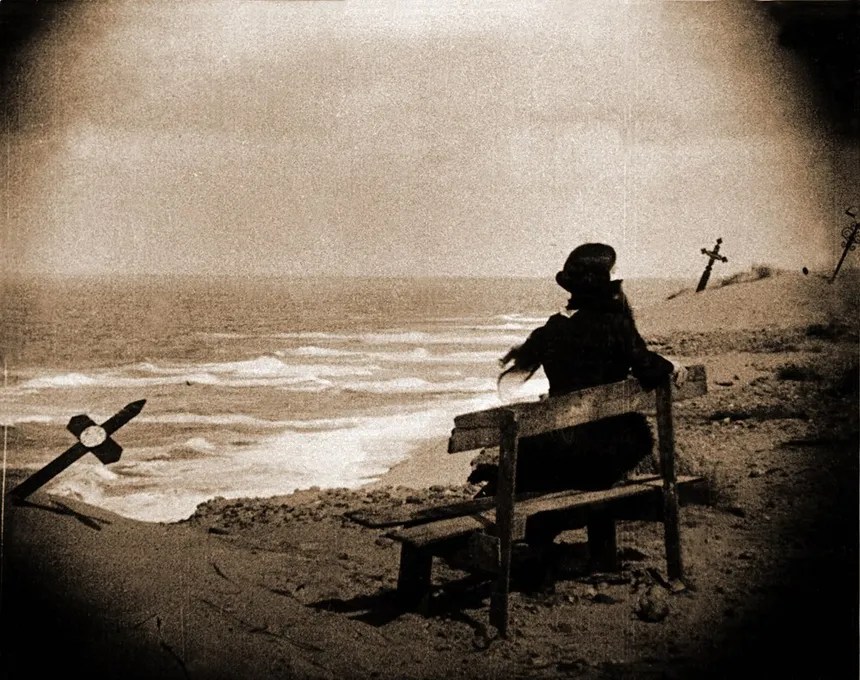
      Greta Schröder in Nosferatu (1922)

An important instance: Bram Stoker’s ”vampire” character is a symbolic reflection of sexual desires which are misdirected (perverted) both during and after the French Revolution Europe; the people, especially the more privileged, set the traditional moral order aside – this means that they threw aside the obligatory code that we should “love our neighbors as ourselves,” and instead,  justified libertinism in the name of freedom and “The Revolution.” The vampire character is the persona of those whose sexual activities are purely self-oriented – the vampire takes and never gives, eternally seeking, but never finding satisfaction or true rest. Jones points out that Bram Stoker was known for his late-night sexual activities and theorizes that writing Dracula (and another thematically similar story, The Lair of the White Worm) is the author’s way of cathartically expressing subliminally what he does not acknowledge to himself: the repressed guilt of his immoral and decaying (literally – he appears to have had an STD) life; it rises to the surface through his fiction.

Mary Shelley Photos
Mary Shelley (fineartsamerica.com, Everett)

Mary Shelley, the author of Frankenstein, was the daughter of the most prominent feminist of the late 18th-19th century, Mary Wollstonecraft. Her mother lived the sexually liberated life of the revolutionary, first becoming pregnant with Mary’s elder stepsister, only to be abandoned by the playboy father and left in poverty in Paris. Wollstonecraft would later marry William Godwin, another man with revolutionary views, while pregnant with his daughter, Mary.  As Jones says, young Mary imbibed the revolutionary philosophy of her mother and father, eloping at a young age with the poet Percy Bysshe Shelley while he was already married. This elopement appears to have consisted of a threesome with her stepsister, Fanny, who left with them, because this was what Shelley wanted. Later, another woman, Jane, was added to this menagerie. The results of this arrangement were ultimately devastating for the women who knew Shelley well. Just as Mary’s mother had attempted suicide, Shelley’s first wife Harriet, eventually tries and succeeds, as does Mary’s stepsister, Fanny.
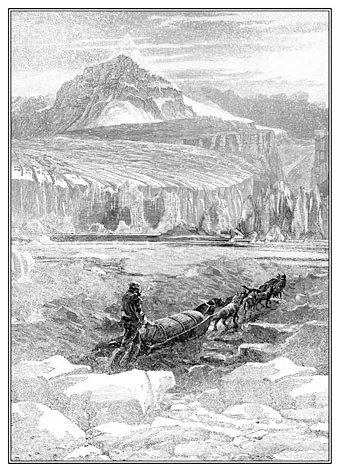
    The ice floes (johncoulthart.com)

While others have seen Frankenstein as a cautionary tale about the dangers of technology run amuck, Jones posits that the character of “The Monster” functions at a more subterranean level. The attempt of the French Revolutionaries and their followers was to “remake” human nature according to their imaginations, and this particularly includes jettisoning traditional sexual mores. Mary is in the unhappy position of philosophically assenting to this belief, both because she was brought up with it, and because Shelley enthralls her at a young age and continues to assert it during their long relationship.

Jones’ book posits with substantial evidence that while with Percy, Mary Shelley read (probably Percy’s copy of) the Marquis de Sade’s Justine, a pornographic fictional story banned in most countries but a copy of which was owned by Percy. While the poet may have swayed Mary to participate in such sexual deviancy, her own personal experience with him over time, even evidenced by some of her writings, reveals that this lifestyle and belief system did not end well for her, but instead concluded with the pain of knowing betrayal as a way of life.
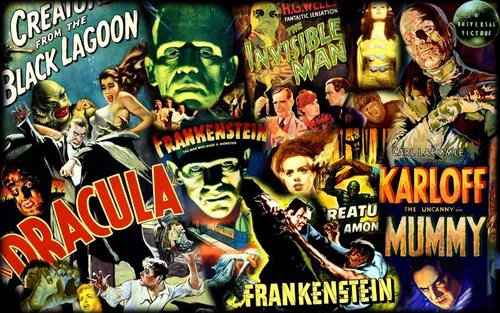
Throughout his book, Jones draws in significant aspects of important horror movies, doing a deep dive into interpreting their influence, beginning with the original Nosferatu in 1922, and tracing up to recent times. The thread is clear and often frightening because his analysis makes an almost airtight case for the argument that most of these films are, indeed, about the disastrous, societally apocalyptic results of rampant sexual deviation. In the case of some movies, such as Alien, the case is obvious.

For insight into the positive effects of that era, especially in the area of Christianity, I recommend Andrew Klavan’s recent book, The Truth and Beauty.  However, that is the topic for a different article. If you want to have a “deep think” about the genre of horror, its roots, and its influence on society, I highly recommend Monsters from the Id.

Jones briefly mentions that some of the Romantic authors such as Wordsworth (and others) eventually reject outright the philosophy of French Revolution; they see first-hand what it creates and more importantly – destroys. In my opinion the Romantic Era was a genuine and justified push-back against the materialism which had developed since The Enlightenment; how this reaction was expressed was highly dependent upon the worldview of each specific author.

Monsters from the Id: The Rise of Horror in Fiction and Film can only be found on the E. Michael Jones site: https://www.fidelitypress.org/about-the-author, or at a used bookstore. I found that the used bookstores online charged more than E. Michael does on his site.

Author: Cindy C. Lange December, 2023

The Internal Journey of Frodo’s Fellowship

The Fellowship of the Ring sets the stage for the Lord of the Rings series as Frodo and his companions begin their perilous and often confusing journey, which stands in contrast to the ordered world in which they live, The Shire, in Middle Earth. This “disordered” journey is a form of entering chaos: Like King Arthur’s knights as they sally forth from Camelot, the members of The Fellowship venture far and wide to conquer evils which surround them. However, unlike the Knights of the Round Table, the members of The Fellowship recognize that as they set out to destroy evil, they also bear the potential for the destruction of the kingdom within themselves.  The Ring itself is a constant reminder to them that they must first fight their own internal selfish desires in order to save The Shire.


As a “quest” story, the novel contains elements of both classical and medieval literature. Middle Earth is a highly ordered world in which all creatures have their proper roles which are integral to the natures of the characters: an elf could no more attempt to behave like a hobbit than you or I could attempt to behave like a dog or a cat. This order is hierarchical; some creatures’ duties—and some characters’ duties– are more significant in the larger community than others; some folks are more civilized and wealthier than others. However, in this sort of society, a person with a “lower” occupation or status is not a less important person. For instance, the Innkeeper at The Sign of the Prancing Pony, Mr. Butterbur, is no less valuable than Gandalf. Rather, his role suits him and his class of creature; his job “belongs” in the fabric of the society just as much as Gandalf’s does. But Tolkien breaks free of the traditional medieval roles when he calls Frodo, that modest and insignificant hobbit, to save the kingdom.

As is also true in the King Arthur stories, Middle Earth is a place where the natural world is important and valuable. Being “good stewards” of what we are given to tend, whether it be a garden, a forest, or a river–is key, and there is a balance between the creatures’ using and respecting nature. Thus, the hobbits cut back the trees from the Old Forest at the edge of their lands, but leave the Old Forest alone in every other way. Nature is connected to many of the creatures closely, as we see with Goldberry, who, we are told, is the daughter of the River. Also, the natural world reflects the nature of the creatures who inhabit it; the hobbits’ shire is green and cozy and friendly. In Middle Earth, the physical world embodies the goodness and concreteness of reality, and this is most carried forth into the lives of the hobbits, whose liking for beer, food, gift-giving, home and companionship emphasizes their close and deep connection to the earth and world around them. The interactions which the members of The Fellowship will make with the forest and the river serve to help us understand that nature itself is being corrupted and disfigured; the hobbits are responsible for recovering both the kingdom and its environment.

As did the knights of medieval times, Frodo accepts the challenge to go forth in search of danger. Though Gandalf tells him that he should not go out of his way seek danger, the truth is that in order to make sure that the Shire is kept safe, Frodo must plunge headlong into an unknown evil, putting his life in jeopardy.  Like martyrs and war heroes, Frodo charges ahead to do the right thing despite his fear, weakness, and sinful desires. Where the quest ends he does not know; the path he must follow is also a mystery. What is clear is that Frodo and his friends choose to respond to the challenge of the quest regardless of their great personal weaknesses and fears.

©Cindy C. Lange, MA | integritasacademy.com

The American Spirit in Florida: A Review of Patrick D. Smith’s “A Land Remembered”

A Land Remembered is a uniquely American epic—set in Florida, but reminiscent of the best of the Western histories and sagas. It reflects and retells the settling of Florida, incorporating stouthearted characters who survived swamp, jungle, hurricanes, wild animals, to conquer the humid and often unfriendly Florida territory. The story also has themes redolent of the tales of Wild West: the arguments between those who want to fence the land and the earlier settlers who want the land left free and open; the fiercely independent spirits of those who dared to settle and conquer this hazardous, uncivilized land.

The tale covers 3 generations, beginning with Tobias MacIvey, the bold pioneer who first entered the Southern wilds, and continues with his son Zech and then grandson Solomon. Each man represents (and furthers) a specific era in the development of Florida. Tobias, the patriarch, is the one most in tune with nature, as with his wife and baby he attempts to survive in the free, open lands while battling the elements. His attitude towards the Native Americans is one of friendly coexistence, and when his son Zech grows up, he inherits this attitude, and falls in love with a young Seminole woman—instead of choosing between her and the white woman he marries, he loves them both, thus symbolizing the tenuous “marriage” of the two cultures, and the influence of each upon the other.

tobias
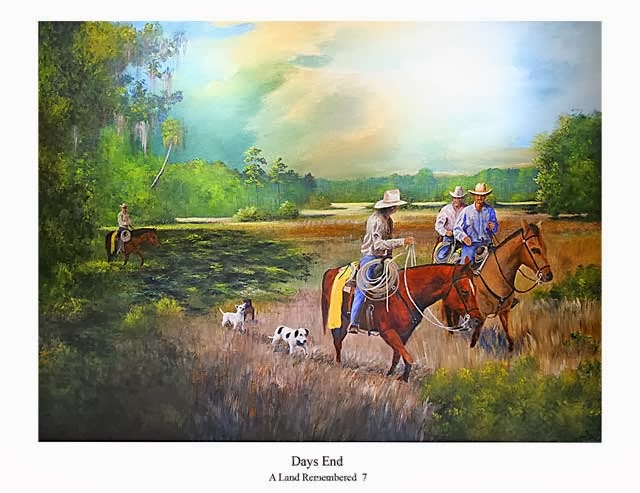
Tobias at day’s end; Rick Powers, artist

The story also exhibits the ways in which this uncultured land, like the west, equalizes the races, as African-American ranch hand, “Frog” becomes part of the warp and woof of the MacIvey family. This primitive land, untouched by “culture,” providentially allows for all peoples to meet on a level plane, and they build the future together, rather than as master and servant. Florida is a new kind of “south.”

Lake-Kissimmee-1024x682
Lake Kissimmee

The grandson, Sol, chooses not to live on the land, but instead becomes a real estate developer, thus introducing us to the “new” Florida we know today: a land of entrepreneurs and people who, for the most part, do not live in the agrarian and ranching culture of those white people who previously populated the land. The story begins with a flashback as Sol, aged and dying, chooses to return to the cabin of his forefathers, leaving behind the life of luxury he has led, regretful that he has not kept the values of his father and grandfather. A Land Remembered is a profoundly “American” piece of literature in every way, genuine in its telling. It pulls powerfully at the spirits of those of us who love the pioneer character, with all of its bravery, faults, and independence of mind; the spirit which created America. ⸸ 

“All I’m trying to tell you is to be strong. Don’t ever let nothing get you down. Don’t be afraid or ashamed to love, or to grieve when the thing you love is gone. Just don’t let it throw you, no matter how much it hurts.”
― Patrick D. Smith, A Land Remembered

A young people’s version of A Land Remembered is available, and is used in many Florida schools.

©Cindy C. Lange, MA