
Fearful Fictional Foes – A Review of
Monsters from the Id: Horror in Fiction and Film
E. Michael Jones posits the original yet highly plausible thesis that the genre of “horror” is a psychological outgrowth of the repression of moral sensibilities occurring since the shift away from Judeo-Christian values after the Enlightenment. His sweeping historical argument begins with Mary and Percy Bysshe Shelley’s philosophical grounding in the tenets of the French Revolution, especially in the sexually permissive aspects of it. Frankenstein is Mary’s symbolic expression of her painful disillusionment regarding the efficacy of that materialist moral foundation and is the beginning of the genre of horror which has grown to become the quintessential psychological expression of the painful results of Enlightenment mores and values. An original and evocative book which also encompasses the vampire tradition, Monsters captures the imagination as it persuades. Extensively backed up with historical notes, examples from film and fiction, and a creative yet highly persuasive thesis.

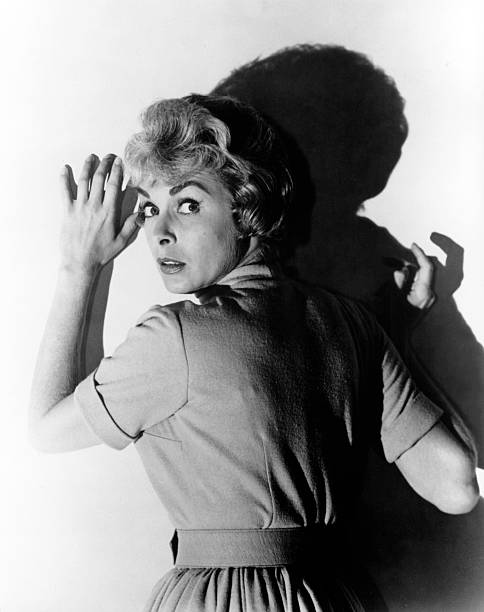
Why are people intrigued with horror and – why do we like to be afraid? Why do many of us like to feel that thrill, that dropping out of the stomach from underneath us, that sense that all around us is out of control? The answer, I believe, is not that we like genuine fear. What we do find gratifying is to experience a simulacrum fear when we can control it, and when we know it’s not real. Ok, that makes sense, and it probably seems obvious once you hear it. But then the question is – Why? What makes most of an entire nation want to watch Hitchcock’s 1960 movie, Psycho, or more recently, become obsessed with zombies, vampires and even aliens? And what do these works, along with countless others, all have in common?
According to E. Michael Jones, the desire for horror arises from our societal rejection of morality due to the influence of the French Revolution; this rejection causes us to “sublimate” our innate sense of what is moral and immoral. This repression leaves us with a need to “let out” the guilt we feel from having sublimated our consciences. But this guilt must be expressed in curious ways because it will necessarily symbolically reveal the deep-set, hidden agony felt by those who deny their guilty consciences from themselves.
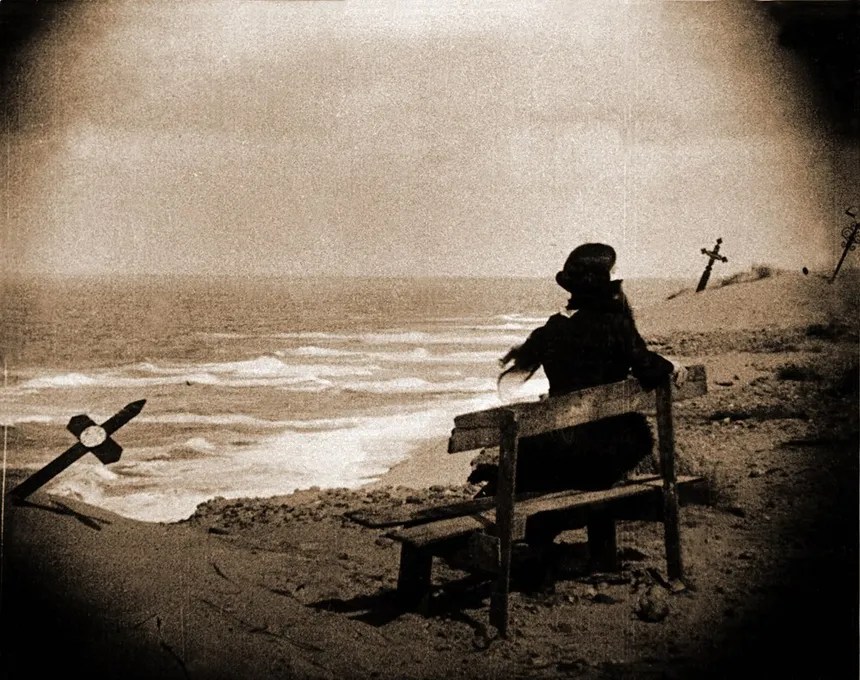
An important instance: Bram Stoker’s ”vampire” character is a symbolic reflection of sexual desires which are misdirected (perverted) both during and after the French Revolution Europe; the people, especially the more privileged, set the traditional moral order aside – this means that they threw aside the obligatory code that we should “love our neighbors as ourselves,” and instead, justified libertinism in the name of freedom and “The Revolution.” The vampire character is the persona of those whose sexual activities are purely self-oriented – the vampire takes and never gives, eternally seeking, but never finding satisfaction or true rest. Jones points out that Bram Stoker was known for his late-night sexual activities and theorizes that writing Dracula (and another thematically similar story, The Lair of the White Worm) is the author’s way of cathartically expressing subliminally what he does not acknowledge to himself: the repressed guilt of his immoral and decaying (literally – he appears to have had an STD) life; it rises to the surface through his fiction.
Mary Shelley, the author of Frankenstein, was the daughter of the most prominent feminist of the late 18th-19th century, Mary Wollstonecraft. Her mother lived the sexually liberated life of the revolutionary, first becoming pregnant with Mary’s elder stepsister, only to be abandoned by the playboy father and left in poverty in Paris. Wollstonecraft would later marry William Godwin, another man with revolutionary views, while pregnant with his daughter, Mary. As Jones says, young Mary imbibed the revolutionary philosophy of her mother and father, eloping at a young age with the poet Percy Bysshe Shelley while he was already married. This elopement appears to have consisted of a threesome with her stepsister, Fanny, who left with them, because this was what Shelley wanted. Later, another woman, Jane, was added to this menagerie. The results of this arrangement were ultimately devastating for the women who knew Shelley well. Just as Mary’s mother had attempted suicide, Shelley’s first wife Harriet, eventually tries and succeeds, as does Mary’s stepsister, Fanny.
While others have seen Frankenstein as a cautionary tale about the dangers of technology run amuck, Jones posits that the character of “The Monster” functions at a more subterranean level. The attempt of the French Revolutionaries and their followers was to “remake” human nature according to their imaginations, and this particularly includes jettisoning traditional sexual mores. Mary is in the unhappy position of philosophically assenting to this belief, both because she was brought up with it, and because Shelley enthralls her at a young age and continues to assert it during their long relationship.
Jones’ book posits with substantial evidence that while with Percy, Mary Shelley read (probably Percy’s copy of) the Marquis de Sade’s Justine, a pornographic fictional story banned in most countries but a copy of which was owned by Percy. While the poet may have swayed Mary to participate in such sexual deviancy, her own personal experience with him over time, even evidenced by some of her writings, reveals that this lifestyle and belief system did not end well for her, but instead concluded with the pain of knowing betrayal as a way of life.
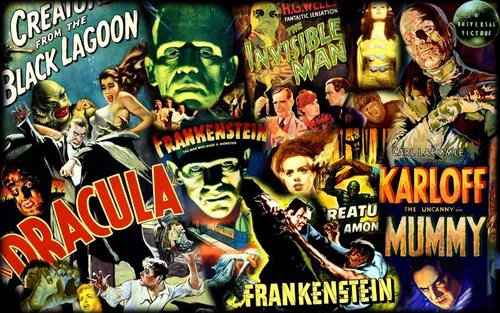
Throughout his book, Jones draws in significant aspects of important horror movies, doing a deep dive into interpreting their influence, beginning with the original Nosferatu in 1922, and tracing up to recent times. The thread is clear and often frightening because his analysis makes an almost airtight case for the argument that most of these films are, indeed, about the disastrous, societally apocalyptic results of rampant sexual deviation. In the case of some movies, such as Alien, the case is obvious.
For insight into the positive effects of that era, especially in the area of Christianity, I recommend Andrew Klavan’s recent book, The Truth and Beauty. However, that is the topic for a different article. If you want to have a “deep think” about the genre of horror, its roots, and its influence on society, I highly recommend Monsters from the Id.

Jones briefly mentions that some of the Romantic authors such as Wordsworth (and others) eventually reject outright the philosophy of French Revolution; they see first-hand what it creates and more importantly – destroys. In my opinion the Romantic Era was a genuine and justified push-back against the materialism which had developed since The Enlightenment; how this reaction was expressed was highly dependent upon the worldview of each specific author.
Monsters from the Id: The Rise of Horror in Fiction and Film can only be found on the E. Michael Jones site: https://www.fidelitypress.org/about-the-author, or at a used bookstore. I found that the used bookstores online charged more than E. Michael does on his site.
The Prophetic Agony of Frankenstein’s Monster
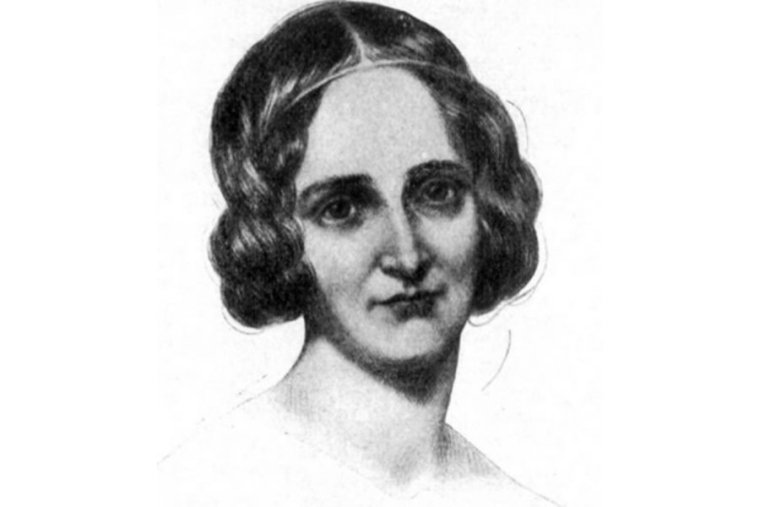
Mary Shelley’s Frankenstein: The Modern Prometheus is a monster of a story. It incorporates the ethics and tropes of the Romantic era in literature while pointing prophetically to the ethical scientific dilemmas of our own time. This much most of us know: In pride and a desire for importance, Dr. Frankenstein creates a nameless creature known only as “The Monster” out of the body parts of corpses, and through a vague sort of electrical process he animates the monster.
But unlike most 20th century movie portrayals, the original story is not a primitive horror film appealing to our base instinct of fear, but rather, a visionary and prophetic tale which imagines a horrific scenario in which man’s attempts to gain the powers of God result in the creation of a misshapen creature who retains the sensibilities and soul of a human being. Since all those he encounters find his visage viscerally repellent, The Monster cannot find happiness and satisfaction for the longings of his all-too-human soul. He aches for human companionship, including a wife and family, but those he meets reject him in both fear and disgust before he can reveal his compassionate, loving spirit to them.
So the story is both a psychological insight into a person who is rejected by society – an outsider – and a monolithic statement about the devastation which occurs when man tries to play God. As the plot progresses we trace The Monster through his agonies: he attempts many times to connect with others, but eventually the continuous rejection he experiences fosters a pain in his heart so great that his bitterness turns him towards hatred and a revenge so all-encompassing that The Monster becomes a murderer. He then seeks reparation from his creator for the very act of his creation, murdering Frankenstein’s best friend, his fiancé, and his brother when Frankenstein will not cooperate with his demand to create a wife/companion for him.
While Shelley did not foresee the specifics, she did accurately imagine the philosophies of the 20th and now 21st centuries, as many scientists now coldly glorify eugenics, create and destroy test tube babies, offer parents the choice of destroying unborn children because of their gender or perceived handicaps, and develop new life from harvested fetal cells. In short, she foresaw the philosophy of Hegel’s “Superman,” borne out first in the
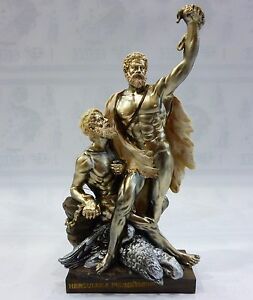
Hitlerian Third Reich and in the policies of many “civilized” nations today. The fact that the full title of the first edition of her novel is Frankenstein: The Modern Prometheus reveals the depth of her understanding of the ultimate consequences in a society which was already rejecting the spiritual and sacred meanings of what it means to be human. She did, indeed, predict the future.
The ancient desire for power – the power to be like the creator, and the ways in which it would be played out in our world today through misuse of the discoveries of the Enlightenment – is so mightily and uncannily portrayed in Frankenstein that it’s almost unbelievable. Shelley truly saw what would happen if we were to choose to believe that the material world is the seat of our being, replacing the beauty of the soul and the true sense of the creator’s natural order with a mythical “perfection” which cannot be attained in this world.
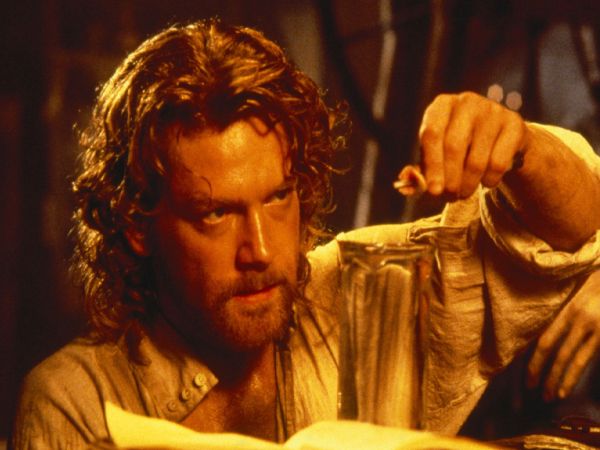
*Recommended: Kenneth Branagh’s 1994 movie, “Frankenstein,” which is faithful to the original story.
Cindy C. Lange, MA
The American Spirit in Florida: A Review of Patrick D. Smith’s A Land Remembered
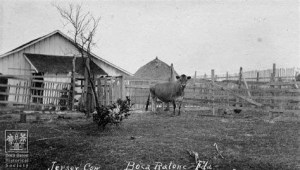
A Land Remembered is a uniquely American epic—set in Florida, but reminiscent of the best of the Western histories and sagas. It reflects and retells the settling of Florida, incorporating stouthearted characters who survived swamp, jungle, hurricanes, wild animals, to conquer the humid and often unfriendly Florida territory. The story also has themes redolent of the tales of Wild West: the arguments between those who want to fence the land and the earlier settlers who want the land left free and open; the fiercely independent spirits of those who dared to settle and conquer this hazardous, uncivilized land.
The tale covers 3 generations, beginning with Tobias MacIvey, the bold pioneer who first entered the Southern wilds, and continues with his son Zech and then grandson Solomon. Each man represents (and furthers) a specific era in the development of Florida. Tobias, the patriarch, is the one most in tune with nature, as with his wife and baby he attempts to survive in the free, open lands while battling the elements. His attitude towards the Native Americans is one of friendly coexistence, and when his son Zech grows up, he inherits this attitude, and falls in love with a young Seminole woman—instead of choosing between her and the white woman he marries, he loves them both, thus symbolizing the tenuous “marriage” of the two cultures, and the influence of each upon the other.

The story also exhibits the ways in which this uncultured land, like the west, equalizes the races, as African-American ranch hand, “Frog” becomes part of the warp and woof of the MacIvey family. This primitive land, untouched by “culture,” providentially allows for all peoples to meet on a level plane, and they build the future together, rather than as master and servant. Florida is a new kind of “south.”

The grandson, Sol, chooses not to live on the land, but instead becomes a real estate developer, thus introducing us to the “new” Florida we know today: a land of entrepreneurs and people who, for the most part, do not live in the agrarian and ranching culture of those white people who previously populated the land. The story begins with a flashback as Sol, aged and dying, chooses to return to the cabin of his forefathers, leaving behind the life of luxury he has led, regretful that he has not kept the values of his father and grandfather. A Land Remembered is a profoundly “American” piece of literature in every way, genuine in its telling. It pulls powerfully at the spirits of those of us who love the pioneer character, with all of its bravery, faults, and independence of mind; the spirit which created America.⸸
⸸⸸⸸⸸⸸⸸⸸⸸⸸⸸⸸⸸⸸⸸⸸⸸⸸⸸⸸⸸⸸⸸⸸⸸
“All I’m trying to tell you is to be strong. Don’t ever let nothing get you down. Don’t be afraid or ashamed to love, or to grieve when the thing you love is gone. Just don’t let it throw you, no matter how much it hurts.”
― Patrick D. Smith, A Land Remembered
A young people’s version of A Land Remembered is available, and is used in many Florida schools.
©Cindy C. Lange, MA
The Truth of Fiction: I Heard the Owl Call My Name

What does constitute a great piece of fiction? In our Literature & Composition: Year 1 class, we are reading the bittersweet classic by Margaret Craven, I Heard the Owl Call My Name. The story is about a young Anglican pastor, Mark Brian, who is sent to a rural native community in British Columbia, and concerns his spiritual and internal growth as he learns to love this land and people, unaware that he himself will soon die. Each year when I reread it, I choke up, no matter how much I’ve prepared myself beforehand for the moving conclusion. The book has such power because it speaks truths with beauty and simplicity; the author’s restrained diction causes the reader to genuinely feel the unspoken, deep emotions which the characters express, often through what they do not say as they face their trials and joys. The straightforward yet imagistic style of the book also goes along with the setting and flavor of the native culture, since the people there, in addition to living without most of the material comforts of modern life, are without guile. I Heard the Owl Call My Name also speaks to what is best in us, pointing our souls towards the spiritual values which lie deep within through its symbolic language, borrowed from the natural world.
The novel uses foreshadowing and contrasts between two disparate cultures in organic ways which function as a tapestry, weaving together plot development, theme, and tone to connect the reader emotionally with the characters and their culture. From the first page wherein we a learn that the young pastor is unaware that he is dying, until the closing chapters in which the earthly and spiritual pilgrimages of Mark come to a fitting and moving conclusion, the reader accompanies Mark on his journey towards Love.
The perfect novel is a vessel which contains a unity of subject, thought, and spirit. The perfect novel inspires and rejuvenates our souls, calling us towards the transcendent. The perfect novel leaves us with the sense that we are more complete than we were before we read it; we are more than the sum of our parts; we more keenly know and feel our connections to humanity and to our spiritual roots.
Cindy Lange, MA
Neil Gaiman’s The Ocean at the End of the Lane Furrows of Fabric in Jungian Cloth

In The Ocean at the End of the Lane, Neil Gaiman investigates the ways in which we interpret and assimilate events and memories, and how our ability to incorporate our past affects and determines our present understanding of our selves and the world around us. Gaiman re appropriates disparate myths and symbols in a complex manner; the unifying theme is Jungian psychology, brought to life through traditional symbols the author has synthesized. Reading Ocean is a bit like watching Christopher Nolan’s movie Memento, wherein the character and audience experience the events of his life in reverse, and each slide back into the past presents a different aspect of key events of the protagonist’s life, because we can only cope with the harsh realities of life when they are put into context with the present. In Ocean, though, we are left not solely with the conclusion to a specific story, but rather, the working out of a theory as to how our minds and memories adapt as we grow up and learn about evil in the world and the failings of those we love. It is a book about how we help ourselves understand the vagaries of existence.
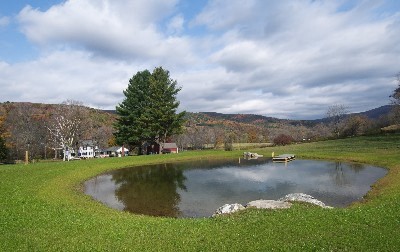
The plot revolves around an unnamed artist’s return to his family home in the British countryside which jettisons us into a flashback; our artist is a bookish boy, aged 7, in the 1960s, alienated in his life with his parents and sister, none of whom are sympathetic to his sensitive, artistic nature. Not exactly original—but Gaiman uses the boy’s sense of disjointedness, of not belonging, to introduce the broader theme of the individual’s psychological journey into self integration. Carl Jung posits that the self can only become whole by assimilating past experiences with personal values and desires. In Ocean, the artist must recall his past in order to incorporate his understanding of painful memories into who he is now. (Though the boy is only 7 years old, that number is probably symbolic; his internal conflicts are those of an adolescent who is trying to “complete” himself and come to an adult understanding of the world.) The book investigates the traumatic events which led to the boy’s entrance into adulthood, and therefore, full personhood, but ultimately, we learn that he has returned many times to the ocean; i.e., we all must go back to revisit our memories periodically if we are to continue the process of understanding who we are, and in order that we may make sense of our personal “worlds” within the context of our larger reality.
Ocean is a full blown myth which explores our subconscious and conscious motivations and memories; Gaiman questions the validity of our recollections while at the same time affirming the importance of them as the fabric by which we know ourselves. However–and this is the crucial conflict in the book–we cannot directly access our painful experiences–the “raw” data–without experiencing a disintegration of the self; we can only accept and integrate major changes in our lives through symbols and archetypes, which facilitate the integration of these occurrences and memories into the “self.”
Jung’s anima or animus is the vehicle through which experiences are sorted, interpreted, and assimilated into the self, and in Ocean, the Hempstock family, and particularly Lettie, play that role. The name Hempstock points the reader clearly in the direction of alternative understandings of reality, since the women, like a drug, help him access hidden recesses of the mind. If the boy allows them to, the Hempstock anima will lead him into fully integrating all of his experiences, both negative and positive. Lettie, her mother and grandmother are guides to the personal unconscious. As the young boy’s personal anima, Lettie is his Beatrice, his psychological guide.
The boy initially meets the Hempstock women because he and his father discover the body of a man they know who has committed suicide in their family car–down the lane. The three women take the boy through the perilous waters of coming adulthood, self-understanding and acceptance of reality. They give him safe harbor–a psychological safe “place” which is apart from his increasingly unpleasant and unacceptable home life. They feed him comfort food, a stark contrast to the “burned toast” of his home, and in their role as anima they bring maternal support, teaching him psychological boundaries, “dressing” him in the clothes of his anima– the feminine (opposite) side of his self which must be unearthed and appropriated in order for him to “find” himself.

Throughout the book, Lettie Hempstock asserts that she will keep the boy safe, and it is only when he lets go of her hand while traveling on her land that his foot is invaded by the “wormhole” that allows Ursula Monkton into his world. A cursory reading might seem to indicate that Ursula is evil personified, but that is not the case: several times, Lettie and her relatives state that Ursula must be “contained,” and “sent home,” not destroyed. She must be “put in her place”–categorized and restrained– but the women will not confirm that she is evil, and even assert that she is just doing what she was created to do. When the boy lets go of Lettie’s hand during their initial confrontation with Ursula, he is allowing his raw memories to invade his consciousness; this is why he asserts over and over that it is “his fault” that Ursula has appeared. His recollections will only be put into context when Old Mrs. Hempstock is able to take a needle, dig deeply into his foot, extract the invader, and close the hole up–after which Ursula will “disappear.” Whatever ways in which he has ignored his anima, the “other side” of his soul, have caused destructive, unprocessed memories to invade and poison him. Only through excising such raw memories can he/we have unity and understanding of “self.”
While Lettie’s farm contains the friendly pond she calls an ocean, and it is a place of solace, the boy’s home down the lane is inhabited by a family that expresses no love, and presents meals of burned toast which his father alone cooks. In his home, water becomes a force of destruction when his father, in a rage, nearly drowns the boy in the bathtub in reaction to his son’s lack of acceptance of Ursula as nanny and apparently, as the father’s lover. This event may or may not have occurred, but the symbolism of it is key: the boy’s emotional break with his father, his realization that his father is fallible, signifies the boy’s entrance into the adult world. He has been “baptized” in the painful waters of recognizing that his parents, who have been his refuge, are imperfect, and will not always be able to guide and protect him. The “fabric” of his childhood has been ripped apart, leaving him afraid and vulnerable, but in accepting the help of the Hempstocks, he will eventually come to terms with reality.
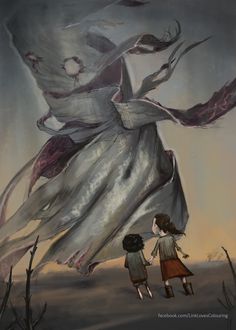
When Lettie first takes the boy for a walk on her farm, they meet the piece of ugly canvas fabric which is Ursula, waiting to be “set free” to enter the boy’s world. Because he lets go of Lettie’s hand, the fabric is able to enter into the sole of his foot. Lettie has used a divining rod, and the two of them have found “something brown and furry, but flat, like a huge rug, flapping and curling at the edges, and, at the front of the rug, a mouth, filled with dozens of tiny sharp teeth, facing down” (38). They immediately see a manta wolf, and Lettie says they have “gone too far out”–they are past the bounds where the boy’s psyche can integrate the dangerous events into his memory safely. This is when he lets go of Lettie’s hand, and the fabric of Ursula reveals herself and invades him and his world.

The middle section of the book consists of Ursula’s ripping apart the fabric of his family in a series of gripping and painful events that leave the reader drained as Ursula emotionally abuses the boy and locks him in his room. As he writes after seeing Ursula and his father embracing, “My parents were a unit, inviolate . . . the train of my life had jumped the rails and headed off across the fields and was coming down the lane with me, then” (80). He escapes down the drainpipe and makes it to the Hempstock farm–to the safe “place” in his mind–and there his anima (the Hempstocks) treats him to a warm bath–a stark contrast to the life-threatening, cold dunking his father has just given him. It is at this time that Old Mrs. Hempstock pulls the wormhole out of him.
But we soon discover that part of the path Ursula has used has inexplicably gone to his chest–he can feel it there. This never leaves him, even when Ursula is banished, because the blithe innocence of his childhood cannot return. Instead, he must learn as he grows to adjust his view of reality by incorporating aspects of the painful until they no longer dominate him.
The last section of the book is a battle wherein Ursula attempts to stay, and the boy must decide to choose whether or not to live in the protection of the “fairy ring” of self-assimilation. It’s worth a read to find out the conclusion, if you like myths, and Neil Gaiman. Not recommended for children.
Neil Gaiman:

(Picture of Ursula: facebook.com/LinkLovesColouring)
_____________________________________________
The Real Winnie-the-Pooh
It would be difficult to find someone who doesn’t appreciate the Winnie-the-Pooh stories, but I do have a question for you: Which Winnie-the-Pooh do you know?
Do you know only the cute cartoon Pooh Bear whose facile, happy-go-lucky visage traverses the screen in classic Disney cartoons? If so, you may want to become familiar with the original Winnie-the-Pooh whose seemingly dense but truly thoughtful proclamations speak to the depths of a child’s heart. His friend Tigger is not the hyper, bouncy-flouncy character he is portrayed as in the films or Disney versions in their little children’s picture books. You can even see these contrasts through Milne’s drawings. For instance, Tigger’s visage and persona are not goofy: he is joyous, and there’s a difference. He may have silly aspects to him but like the others who inhabit the wood, he and his friends are sober-minded, genuine characters who express real questions and observations about their world. For instance, Eeyore is the personification of the side of us which thinks the worst; he reveals to children how others see pessimism, but he also “allows” them to feel this sad side of life. Children with a melancholy bent may find comfort in knowing Eeyore while at the same time recognizing that there is more to life than the discouragement he personifies. Christopher Robin’s living stuffed animals are only stuffed in the sense that they are full of the wonderment and curiosity of God’s children.
The inhabitants of The Hundred Acre Wood reflect the trust Milne had in the insights of children and also, the puzzlement they express about the larger reality, for they do not yet know the infinitude and the limits and of the world. They don’t know what bees can do; they don’t know what balloons cannot do. They don’t know that they may get stuck in a knothole in a tree. Unlike many children today, they (and Christopher Robin) have occasion to do a lot of waiting. They wait by their homes: they wait, and wait, and wait. And while they wait, they have the opportunity to think and we, their friends, get to hear their cogitations and ponder along with them. We especially get to know Pooh’s thoughts about that which he considers or does not understand as he navigates his way through a world he doesn’t comprehend but believes in.
The tone and atmosphere of Milne’s books are in stark contrast to the Disney movies. The stories are placid and meditative. They are slow-moving and polite. They focus on the interior lives of children. When Christopher Robin first bumps down the stairs with Pooh, he opens our eyes and returns us all to a world of childlike wonder where the imagination is celebrated with bliss, freedom, and a sense of rightness. The real Winnie-the-Pooh belongs alongside The Tale of Peter Rabbit as one of the best children’s/adults’ stories of all time.
*You can find the original Winnie-the-Pooh stories by A. A. Milne in any good bookstore or online. There are several books of stories and a book of poems for younger children, also, entitled Now We are Six.

 Freshfirecoal